Tag Archives: flow

Crossover: The Power and Resilience of Diverse Perspectives

Do we appreciate the strength of our crossover connections?

Do we appreciate the strength of our crossover connections?

Pick up an ordinary basket and look closely at the weave.  You’ll find an ancient yet simple way of making something that’s durable, flexible, and resilient.

In fact, a basket’s weave is a great model for how we might interact and learn with others more deeply. We need durability and resilience in our relationships too .. to me, a weave is a powerful way to think about “crossover” in all our interactions, especially when we seek to collaborate.

The power of the basket weave metaphor lies in its very basic structure. The over/under aspect of a basket weave reinforces the notion of complementary, diverse elements.  One thread or strand of cane provides support from one angle, which is further supported in the other direction by another.  These are connected and supported by yet another thread or strand on the perpendicular axis, creating structure, and ultimately, strength.  The tighter the weave, the more durable the resulting creation.

Aristotle was a big fan of metaphor, and I am too. Like so much in our world, we take useful concepts (like metaphor and basket weaving) for granted. But what could we gain if we dig a bit deeper? Is there untapped power in our mental models?

To me, there are 3 areas where I think the notion of a basket weave can help our collaborative efforts:

Unlocking Creativity. Artists are well versed in the flow of possibility that occurs when raw materials begin to show their potential. How might the threads or strands come together? What patterns are possible? How might we weave something new?

Inception of Ideas (or “ideation”). Each thread of insight brings new energy and strength from a different direction, supporting the other threads but in a different way.

Design Thinking. Coming up with new ways to solve a problem (solution patterns?) is at the core of design thinking, where structure, form , function and relevance demand diverse thinking from muliple perspectives.

AMG152709b Basket Weave

Examining the basket weave. It may help to ask: what is possible?

As we bring together design elements or ideas, we are bringing together strands of raw material.  As innovators, we are like basket weavers.  As collaborators, our ideas are like threads.  Our soution may well be the resulting basket.

Here are a few questions to drive this thinking home.

Q1. What challenges do we face when we seek to weave together ideas?

Q2. Why are notion of durability and flexibility important?

Q3. Have you seen examples of ideas woven into a “solution fabric”?

Q4. Where and how else might we apply the basket weave metaphor?

We’ll discuss these topics WEDS 10/16 at 9pET using hashtag #cdna, and again in the social change context with SMCHAT cofounder & special guest moderator Kelli Schmith WEDS 10/23 at 1pET using hashtag #smchat.

I must point out that idea weaving is already in progress. Props to Angela Dunn, Shell Rummel and the crew at #ideachat who provided deep insights on “Design Thinking” that contributed to this post.  To me, the richness of the weave metaphor provides plenty of inspiration, or at the very least, some new thinking based on a very old way to make baskets.

More on metaphor? See G.Lakoff: Metaphors We Live By (1980). In The DNA of Collaboration (2012) it’s chapter 6.

Let’s compare notes on this. I’ll see you online.

Chris aka @sourcepov


Building a Social Community [#USXSW FRI 3/8/13 5pET]

Building a Social Community #USXSW 3 FRI 3/8 4pET

Building a Social Community (c) 2009 Amberwood Media Group

People are social creatures, that much is clear.  We enjoy the company of others, and thrive when we feel connected and included.  But why is it that some communities must be designed and planned, while others seem to appear and grow more spontaneously?

What forces are at work?  What is happening behind the scenes?

Amber and I, like many of our colleagues and friends at SMCHAT, USGUYS, BLOGCHAT MEDIACHAT, KAIZENBIZ, SOBCON, ECOSYS and CDNA, have been witness and party to the evolution of many social communities.  Let’s take the next hour to try to understand the forces at work, to see how we might influence them.  What are the key building blocks?  What is in the DNA of a strong Social Community?

Q1. What is the dynamic that sparks & expands common ground, vision, or a sense of purpose?

Q2. How important are individual relationships, and in what conditions are they formed?

Q3. What key factors influence success of a social community?

Q4. What key factors lead to the demise of a social community?

Q5. Does a social community have an ideal size?

Q6. What advice would you give to someone who wants a social community to grow/thrive in their physical or virtual space?

Join us Friday, 3/8, for #USXSW topic 3, at 5pET.  It should be a great conversation.  We’d love your thoughts.

For a deeper dive?  Check out The DNA of Collaboration, Part 4 on FLOW which takes on many of the process and relationship dynamics introduced here ..

See you online!

Your co-moderators for this segment,

Chris Jones & Amber Cleveland


It’s Your Move: Finding Balance in the Collaborative Flow (Ch.17)

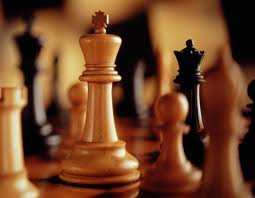
In the game of chess, every move brings important decisions. Is it best to advance, and stake a claim to new ground? Or to retreat, consolidating gains? Taking the lead, or letting the person across the game board set the pace?

Collaboration is fraught with decisions like these, where we must decide how to engage, and then revisit those decisions again and again, making adjustments.

Much depends, of course on our intentions and the context of the situation at hand. Are we there to share and inform, or to learn? Ultimately, isn’t it some of both?

In the context of effective team dynamics, I believe we need a balanced strategy, finding the optimal place between extremes, sharing and learning in useful ways. It’s about letting the circumstance of your knowledge, the topic, and the chemistry of the group tap new, “emergent” possibilities.

As we continue to explore the dynamics of effective collaboration in The DNA of Collaboration, “Balanced Objectives” (Ch.17) asks us to consider the importance of a balanced approach, and to understand how to get there.

In our chat SAT Nov 17 11aET (click here to join), let’s unpack it like this:

  • Q1. Explore the shifting dynamic of teacher v. learner in a collaborative context.
  • Q2. As in chess, collaborators balance opportunities to advance v. consolidating gains. Can we switch often and be productive?
  • Q3. To achieve collaborative balance, must our roles keep shifting between leading and following?
  • Q4. Is there an optimal balance between structured process and a more open, creative flow?

Hope this helps bring the balancing act of collaboration a bit more into focus. It’s critical thinking at the micro level, making decisions in the moment. When it comes to solving problems in teams, paying attention to dynamics like these pays huge rewards.

Challenge me with your thoughts and ideas .. we’re all here to learn!  I’ll see you online!

– Chris Jones, author, aka @sourcepov


How KM opens doors to Learning About Learning (reflections on KM World 2012)

With such a great turnout and set of discussions at KM World 2012, I wanted to spend a few minutes touching on some of the key takeaways. These need to be expanded .. but let’s start the conversation here ..

  • Q1. KM is becoming more about how knowledge moves through organizations and generates value. Does this happen where you work?
  • Q2. KM helps us learn about learning. How relevant is this in your org today?
  • Q3. A key message in KM is moving from structure to flow as prevailing metaphor, reflecting how we learn. Agree?

We’ll discuss this SAT 10/20 at 11aET.

Excited that our book debuted at the conference, with a deep dive at workshop W5 on Tuesday.

Intrigued?  Reach out, let me know your thoughts.

Chris


A Time and Place, Venues for Flow (Ch.13)

Clearly, collaboration requires a venue, a space where people can come together and share ideas.  But to open opportunities for flow, we’ll need to work to get outside the box of traditional meetings. As low tech and old school as it seems, a conference room provides many of the necessary trappings needed for in-depth conversation.

But what else is needed for flow?

As we prepare for KMW12 W5 tomorrow, let’s tap tonight’s special #cdna chat to unpack this.

  • Q1. How can space be modified to capture ideas more fluidly, perhaps using un-conferences as a guide?
  • Q2. How might adaptive facilitation further open dialog?
  • Q3. What metaphors for flow might help collaborators further shed notions of structured facilitation?
  • Q4. Can visualizing idea streams make a difference?

Hope to see you online, as we begin to unpack “flow” in the collaborative context.

– Chris Jones aka SourcePOV, author, The DNA of Collaboration


KMW12 Workshop W5 in Washington DC: Book author Chris Jones will be discussing the Flow of Insights

Excited that our author, Chris Jones, will be speaking at KMWorld in Washington, DC on 10/16, leading Workshop W5: Knowledge Networks and the Flow of Insights.  The session will be a great opportunity to delve into aspects of The DNA of Collaboration that deal with the collaboration process itself, including roles, space/venue and synthesis.

See the SourcePOV blog for more on the planned 3-hour session.  Registration is still open at the KMWorld site

Also, you’ll find more about the event in the news, courtesy PR Web.