Category Archives: booktour

Collaboration DNA: The Dilemma of Culture (Ch.10)

CHARLOTTE, NC. By CDNA author

For organizations that seek change, few factors are more important than creating the right culture. Lou Gerstner said it was the main issue in the transformation of IBM from hardware to services.

The challenge is that few understand what it is, or how it works.

It can be hard to define, because it works in subtle ways. It shapes the behaviors of people in an organization, but it is also shaped by them, in a two-directional flow of influence. It reflects how people in the organization have come to view success, over time. Executives can try to shape it, but without significant investment in the effort, surface attempts to force change routinely fail.

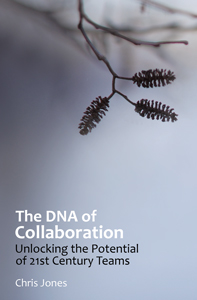
I’ve covered these dynamics in Chapter 10 of The DNA of Collaboration, based on research I started in 2010 on this fascinating topic, recounted in my original 8-part blog series.

Today, let’s attack 5 of the main dynamics that the most important to understand:

  • Q1. How can we navigate the complex layers of Org Culture, eg. professional, hierarchy, generational, demographic?
  • Q2. Which Org Culture model do you see most: Control, Silo, or Network? Can they coexist?
  • Q3. What happens in Cultures where contrarians rule? 
  • Q4. Can Organizations have a Culture of trust? If so, how?
  • Q5. Can employees make a difference  and influence change?

We could go on for days on these topics, and perhaps we need to. These are the complex problems that motivated my research, that over time turned into the book. I kept seeing dysfunctional behaviors in organizations large and small, and set out to discover what what happening.

It’s not just about culture, of course. But culture is where so many of the issues surface, on a scale that’s maddeningly difficult to influence. Ask Lou Gerstner. Ask your CEO. Ask yourself. Is the culture of your organization empowering it’s employees for success?  Is there something employees can do about it?

Looking forward to our chat.


Collaboration DNA: Are We Listening? (Ch.8)

Collaboration starts with the ability to listen. That’s also where it often stops.

Amid a deluge of information and a proliferation of ways to get it, it’s no wonder that we tune out to so much of what is happening around us. But it spells trouble when we try to solve problems together.

I’ve addressed active listening as a core, foundational element in The DNA of Collaboration because so often it’s where we run off the rails. For years we’re programmed to speak up, take a stand, and broadcast our ideas. So what do we do in meetings? We wait for our turn to broadcast. If there’s spare time in between soliloquies? We use it to polish up the next one.

Collaboration doesn’t work that way. True communication requires give and take, focus, and our full awareness of others around the table (virtual or otherwise). It’s amazing how many f2f meetings and virtual chats I attend regularly where people don’t listen in the slightest. They might as well be wearing headphones. Some of them actually are. And there’s that whole fiddling with email on the smartphone routine.

For true engagement that leads to valuable collaborative outcomes, we need to change our approach.

Let’s look  at some key CDNA discussion points our next Virtual Book Tour conversation, SAT 9/8 11aET:

  • Q1. Bias for Respect. Do you value the input of others? How do you show it?
  • Q2. Bias for Trust, aka ‘benefit of the doubt’ means leaning into new interactions. Do you do this? Have you been burned, and if so, did you bounce back?
  • Q3. Active Listening. What steps can you take to be present, in the moment?
  • Q4. Empathy. Is this a natural trait, or a skill that can be learned? 
  • Q5. Positive Outlook. Do we come poised to win the debate, or to learn? What are the signs? How can we influence mindset?
  • Q6. Goal Orientation. We’ve said our intent is key. Why does it impact our ability to listen in the moment?

To me, collaborators must be willing to listen. It seems so intuitive. But how often do we try to do it? How often are we successful? Join us, as we discuss this important thread. To join the conversation, click here.

– Chris Jones, author, @sourcepov


Learning to Learn: Is Critical Thinking in your Organization’s DNA? (Ch.20)

Unless you are a detective, a teacher or a literature buff, you probably don’t give critical thinking the time of day.  Getting to the core of issues and understanding hidden implications is hard work.  Most of us seem never to have the time, or when we do, we lack the energy.

But what’s the long-term effect when we turn away from deep reflection as a way to navigate the world’s challenges?  Has reading with a discerning eye become a lost art?

And do our schools still give it the needed focus?

These and other aspects of critical thinking are woven throughout The DNA of Collaboration. It is an essential thread in the process of solving problems, not to mention the important work of framing our ideas in the first place. In the book, I touch on the core elements in Chapters 1 and 2, expand on them as we unpack collaboration, then pull all of the dimensions together in Chapter 20, making the case for why deep discernment skills are so important.

Let’s define ‘critical thinking’ in the learning context as: ‘deep & thorough analysis on many dimensions of problem or idea’.

With that as a foundation, let’s look  at several key aspects of this in today’s Virtual Book Tour conversation, 12/15 11aET:

  • Q1. Is our ability to discern fact from opinion losing ground?
  • Q2. Experts approach & define #criticalthinking differently. How do OD & KM treat this, compared with EDU?
  • Q3. Where does #criticalthinking show up in the workplace?
  • Q4. Where & when in school must #criticalthinking be tackled?
  • Q5. The 21st century may need a dose of Descartes or Kant; what can we still learn from classic philosophy?

To me, collaborators must be hungry for answers. Critical thinking must be a part of our learning DNA. It’s how we’ll survive the 21st Century. I hope you’ll join us as we start to discuss the why and the how.

See you online. To join the conversation, click here.

– Chris Jones, author, @sourcepov


Collaboration DNA: Unpacking Intention (Ch.4)

When it comes to teams, do you wonder about motivations of others?  What about your own?

As the author of The DNA of Collaboration I’m excited to kick off our virtual Book Tour (via Twitter chat) this SAT 8/4 at 11aET.  It should be an interesting and insightful conversation on “Intention” .. an important topic that I explore in Chapter 4.

Here’s how we’ll frame the conversation:

Q1. In team settings, can we detect (a.) going thru motions vs. (b.) acting from deep conviction? Can asking ‘why’ surface #intention?

Q2. Wheatley and Maslow tell us survival is a primal motivator. In business, how does this impact our willingness to take risks?

Q3. Dweck says learning & risk-taking are easy when we have a growth mindset vs. obsessing on our perceived fixed limitations. Agree?

Q4. The 21st century seems to demand focus on quick wins over longer-term goals. Can both be achieved? What’s the priority?

After brief introductions at 11aET, we’ll jump into the fray to tackle these questions.

Want to get a feel for intentional collaboration in #cdna context?  Use the “Look Inside” feature on Amazon .. I introduce the concept in the Prologue, which you can read in it’s entirety online.

More on the series? Our broader agenda is taking shape.

Thanks in advance for your interest; I hope to see you at this discussion, or at one like in in the weeks ahead. Mark your calendars:  SATURDAYS 11am ET.

– Chris Jones, author, The DNA of Collaboration